
What is a T&E in bond move? Steel from a US port to Canada
Published
A T&E in bond move takes foreign freight that landed at a US port across the US and out at the Canadian border without being entered into the US, so no US duty is paid. The truck runs under a CBP bond, the freight is reported out when it crosses, and your customs broker clears it into Canada.
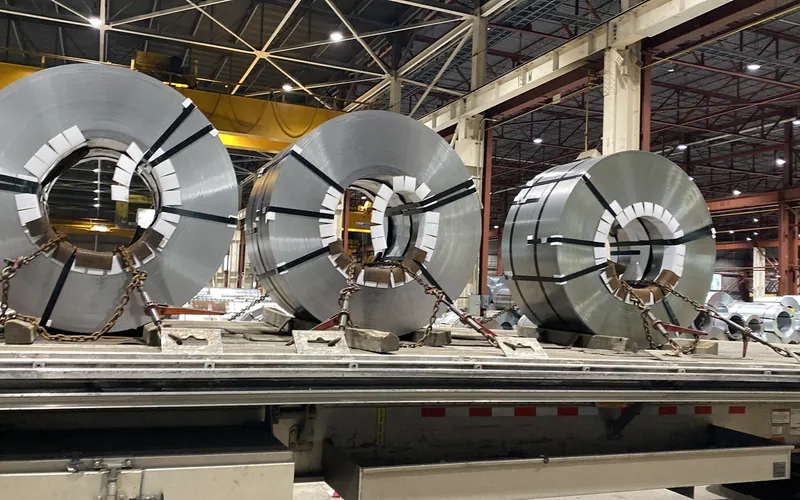
T&E stands for transportation and exportation. Most people still call it a 7512, after the paper CBP Form 7512; it is filed electronically in ACE now. For steel and aluminum headed to an Ontario or Quebec plant through Philadelphia, Baltimore, Newark or a Great Lakes port, it is the normal way to move the lot, because freight that is never entered into the US never pays US duty, Section 232 steel and aluminum tariffs included.
The 3 kinds of in bond move
| Type | What it does | Used for |
|---|---|---|
| IT, immediate transportation | Moves the freight to another US port, where it is entered into the US | Freight staying in the US |
| T&E, transportation and exportation | Moves the freight across the US to a port of exportation, where it leaves the US | US port to a Canadian plant, the common steel move |
| IE, immediate exportation | Exports the freight from the same port it landed at | Freight that leaves the US right where it arrived |
Freight that was already entered into the US, such as steel your US broker already cleared at the port, is not in bond. It moves to Canada as a regular export.
The clocks on a T&E
| Clock | Limit | Rule |
|---|---|---|
| Get an in bond, an entry or a zone admission on file after the cargo is landed | 15 calendar days, or CBP sends the cargo to general order | 19 CFR 4.37 |
| Reach the port of exportation | 30 days from the ship's arrival or the movement authorization, whichever is later | 19 CFR 18.1(i) |
| Report the arrival at the port of exportation | 2 business days | 19 CFR 18.1(j) |
| Export the whole shipment from the port of exportation | 15 calendar days after all of it arrives there | 19 CFR 18.1(k) |
| Report the export | 2 business days after it leaves the US | 19 CFR 18.7(a)(3) |
| Terminal free time | Set by the terminal: 5 working days from the day after discharge at the PPMTA terminals in Philadelphia and Camden | Terminal tariff |
The CBP clocks are generous. A truck from Philadelphia reaches Buffalo in a day, well inside 30. The clock that costs money is the terminal's free time, which runs out long before any CBP limit does. Our post on avoiding port storage and demurrage charges has the free time rules and the math.
Who files it and who closes it
In practice one party files the T&E and reports both ends: the arrival at the port of exportation and the export. There are 2 normal ways to do it.
- The carrier files. The carrier creates the T&E in ACE under its own CBP bond and reports the arrival and export at the crossing.
- The broker files under the carrier's bond. Your customs broker creates it with the carrier's SCAC and written authorization from the carrier, and the broker reports both ends.
Either works. Settle who files when the load is booked, so the in bond is opened once and closed once.
What happens at the border
- The truck picks up at the terminal once the in bond release shows on the terminal's system.
- It runs to the port of exportation named on the T&E, usually Buffalo, Lewiston or Champlain from the East Coast, or Detroit or Port Huron from the Midwest ports.
- The arrival and the export are reported to CBP, which closes the in bond.
- The carrier's ACI eManifest is already on file with CBSA, and your customs broker clears the freight into Canada at Fort Erie, Queenston, Lacolle, Windsor or Sarnia.
What goes wrong, and how to avoid it
- The release comes late. If nothing is on file 15 days after the cargo is landed, it goes to general order, and the storage there is the importer's cost. Send the release and the bill of lading as soon as you have them.
- The freight gets entered into the US by mistake. Once the lot is entered for consumption, US duty and Section 232 tariffs are owed. Tell the broker at the US port that the lot is moving in bond to Canada.
- The in bond is left open. An arrival or export that is never reported shows the freight as missing, and CBP can claim liquidated damages against the bond. Whoever filed it closes it.
- CBP holds the lot. A hold stops the move until CBP releases it and can add days to the in bond move, so ask your customs broker how it affects your deadline. The terminal can keep charging storage, so tell us the day you hear of a hold and we go back in the first day the release clears.
- The wrong port of exportation. The T&E names where the freight leaves the US. If the route changes, the in bond has to change with it, before the truck reaches the bridge.
How Fission runs a T&E
Fission carries its own CBP custodial bond, Activity Code 2, the bonded carrier bond, so a T&E from a US port runs under our bond and not a broker's or a port trucker's. Dispatch can file the 7512 in ACE and close it at the crossing, or your broker files it under our bond with our SCAC and our written authorization. Fission assigns TWIC drivers to US port pickups, and when the truck that fits the load has a driver without one, we arrange gate access ahead of time. The terminal appointment is booked before the truck leaves Ontario. Coil rides on a 53 ft Conestoga and plate on a Conestoga or flatbed, up to 45,000 lb off the East Coast ports, and a 6 axle takes up to 76,000 lb from the Ohio and Indiana ports. Port drayage at Fission is to Canada only, so every US port pickup delivers to Ontario or Quebec. The terminals and crossings we run are on port trucking to Ontario and Quebec, with the detail on steel coil transport and cross border flatbed.
To quote a port pickup, send the port and terminal, the release or bill of lading number, the vessel and its discharge date, the piece count and weights, the delivery address, your customs broker's contact, and who is filing the in bond. Request a quote or call dispatch at (905) 799 7900, press 1.
Questions importers ask
Do I pay US duty on steel moving in bond to Canada?
No, as long as it stays in bond and is exported. Freight on a T&E is never entered into the US, so no US duty is paid, Section 232 steel and aluminum tariffs included. Canadian duties and taxes are handled by your customs broker when it clears into Canada.
How long does a T&E have to reach the border?
30 days from the ship's arrival or the movement authorization, whichever is later, under 19 CFR 18.1(i). A truck from an East Coast port usually reaches the border in a day.
Who closes the in bond?
The party that filed it. That party reports the arrival at the port of exportation and the export within 2 business days. At Fission it is either our dispatch under our bond, or your broker under our bond with our SCAC.
Is a 7512 the same as a T&E?
Yes, for this move. CBP Form 7512 was the paper form for in bond moves, and the name stuck after filing moved into ACE. A T&E is the 7512 type for freight that leaves the US.
Sources: 19 CFR Part 18 (in bond, sections 18.1, 18.7 and 18.20) and 19 CFR 4.37 (general order), current on the eCFR; the PPMTA terminal schedule for free time. Rules change, and this post is general information, not customs advice. The in bond record and your customs broker govern the move.
More from the yard
Need a truck this week?
Send the lane and the weight. A dispatcher prices it within 1 business hour, and someone picks up the phone 24 hours a day.