
How to avoid port storage and demurrage charges on steel
Published
A 44,000 lb coil load that sits 10 days past free time on a Philadelphia or Camden terminal costs about $372 in storage. On a 20 truck lot that is about $7,440. Here is how the clock works and how we plan around it.
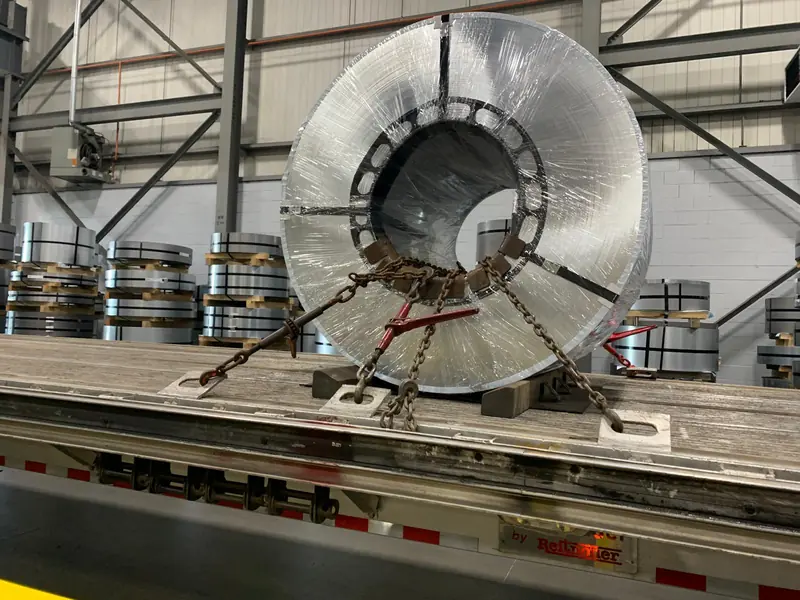
Fission Logistics trucks steel, aluminum and pipe off ports from Baltimore and Chicago to Montreal and delivers it to plants in Ontario and Quebec. The loads that cost our customers money at the port rarely go wrong on the highway. They go wrong in the first 5 days, before a truck ever shows up.
Storage and wharf demurrage are the terminal's charges for cargo left on the dock after free time. Detention is the trucker's charge for a truck held at the dock past its loading time, and ocean lines use the same word for their containers. This post is about the terminal's storage charges, which trucks control.
The clock: free time
Free time is how long cargo can sit on the terminal after it comes off the ship before charges start. It is short, and it is not the same everywhere.
- The terminals on the published PPMTA schedule (Tioga, Pier 122, Balzano and Broadway) give 5 days for imports, not counting weekends and holidays. It starts at 8 am the day after the vessel finishes discharging and ends at 5 pm on the last day.
- Port Wilmington's 2018 tariff gave steel 30 calendar days but aluminum and other non ferrous metals only 5. Same terminal, same ship, very different clocks.
- Some terminals don't publish free time at all. Ask for the last free day in writing.
- A CBP exam or hold stops the 30 day in bond clock, but the terminal can keep charging storage. Tell us the day you hear of a hold and we line the trucks up for the day the release clears.
Two things catch people. Free time starts from discharge, not from when you get the arrival notice. And weekends that didn't count toward free time do count once storage starts.
What it costs when the clock runs out
These are the published PPMTA rates for dense cargo like steel. Your terminal's tariff may differ, so check the current one.
| Charge | Published rate |
|---|---|
| Wharf demurrage, first 5 days | $0.316 per 100 lb |
| Second 5 day period | $0.53 per 100 lb |
| Each period after that | $0.80 per 100 lb |
| After 90 days | 3 times the demurrage rate |
| Truck loading | $200 minimum per truck, paid on every load, so plan full trucks |
The math on one lot
Take 880,000 lb of coil, 20 truckloads of 44,000 lb, landing at Tioga, Balzano or Broadway.
| How it goes | Storage |
|---|---|
| All 20 trucks out inside the 5 free days | $0 |
| 2 trucks a day, so the last 10 loads clear inside the first 5 day period after free time | About $1,390 |
| The whole lot sits 10 days past free time | About $7,440 |
Getting 20 trucks to the terminal in 5 working days is a planning job. It has to start before the ship docks.
How we plan a port pickup
- Start from the vessel. Send the vessel name, the ETA and the piece count as soon as you know them. We plan trucks against the discharge date.
- Get the last free day in writing. From the terminal or your forwarder, for your commodity. We plan backward from it.
- Book the appointment before the truck leaves. eModal at Holt terminals, the terminal's own system elsewhere. Confirmed the day before.
- Have the customs side ready. CBP needs the in bond or an entry on file within 15 calendar days after the cargo is landed. After that the cargo goes to general order, a bonded warehouse with its own storage bill. Fission files the 7512 under our own US Customs bond, or your customs broker files it under our bond, and the terminal shows the in bond release before the driver reaches the gate.
- Send the right driver. We assign TWIC drivers to US port pickups. When we need a driver without one, we use a local escort service, booked before the truck leaves.
- Size the fleet to the window. 20 loads in 5 days is 4 trucks a day. We run 80 trucks and 140 trailers, so that is planned, not scrambled. For heavy lots at Hamilton and Oshawa, a 6 axle takes up to 86,000 lb inside Ontario and cuts the truck count almost in half.
- Watch the season. Great Lakes ports close to ships from the end of December until the Seaway reopens in late March or April, and the last fall ships land a lot of steel at once. Book December lots early. The Quebec ports stay open all winter.
If you get an invoice anyway
In the US, the Federal Maritime Commission's billing rule has been in force since May 2024. A demurrage or detention invoice from an ocean carrier or marine terminal must go out within 30 calendar days of the last day the charge accrued, and the billed party gets at least 30 calendar days to request a waiver or refund. The part of the rule that limited who could be billed, the contracting party or the consignee, was struck down by a US court in September 2025, so it no longer limits who gets the invoice. Check who it names, and that it shows the free time start and end, the rate and the days billed, before you pay it. Ask your forwarder, or the FMC's dispute office, CADRS, whether a given breakbulk storage invoice falls under the rule.
What to send us
The port and terminal, the release or bill of lading number, the vessel and its discharge date, the piece count and weights, the delivery address, your customs broker's contact, the last free day, and whether the cargo is still in bond or already cleared into the US. Dispatch names the trailer with the price within 1 business hour. See every port we run on the port trucking page, or start with Philadelphia and Camden, Baltimore or the Port of Hamilton.
Need a truck this week?
Send the lane and the weight. A dispatcher prices it within 1 business hour, and someone picks up the phone 24 hours a day.