
News from the yard,
How a Conestoga trailer works, and why shippers ask for one
106 of the 140 trailers in the Fission Logistics yard in Mississauga are Conestogas or curtainsides. Here's what that means at your dock.
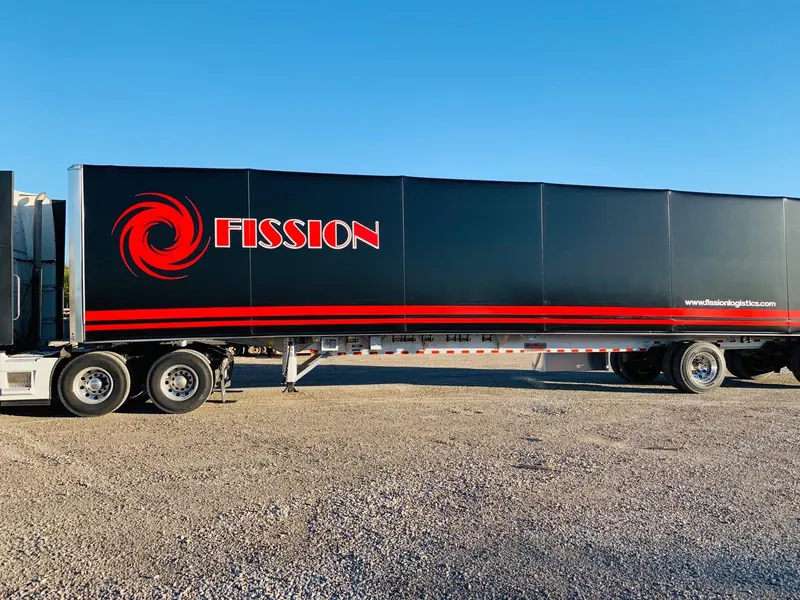
A Conestoga is a flatbed with a tarp that rolls on rails. The driver slides the whole cover to one end, you load the deck with a crane or a forklift, and the driver pulls the cover closed again. The freight rides covered the whole way and nobody throws a tarp.
Why shippers ask for one
Your freight stays dry. Coil, aluminum and shingles arrive the way they left.
Your dock isn't tied up while a driver tarps. Once the load is secured, the cover closes and the truck leaves.
Nobody climbs onto a wet or icy deck in January to spread a tarp. That's safer, and it's faster.
Loading from the side or the top
The curtain opens on either side for a forklift, and the roof slides back for a crane. Coil, plate, extrusions, skidded machinery and palletized building products load the same way they would on an open deck.
Conestoga, Rolltite, curtainside
People use all 3 words for the same kind of trailer. Rolltite is the brand of sliding tarp system on our 53 ft tandems, and curtainside is the general name. Our multi axle units are 50 ft curtainsides with the same sliding roof and curtain, built to carry more weight than a tandem.
When we send an open deck instead
A tandem Conestoga gives you 102 inches of clearance, high and wide. Our curtainside step decks give 120 inches high and 102 wide. Anything taller goes in the well of a double drop. Long structural steel and any load you want tarped your own way go on an open deck.
Send us the load and dispatch will name the trailer with the price. More on the Conestoga and Rolltite page.
Need a truck this week?
Send the lane and the weight. A dispatcher prices it within 1 business hour, and someone picks up the phone 24 hours a day.